
Flat Feet Today, Limited Opportunities Tomorrow
Beyond the Arch: Why Flat Feet Can Block a Future Career in Uniform
For many parents, a child's flat feet might seem like a minor cosmetic concern or something they will "just grow out of".
However, in Malaysia, the shape of a child's foot can be the deciding factor between a successful career and an instant rejection from the nation's most prestigious uniformed services.
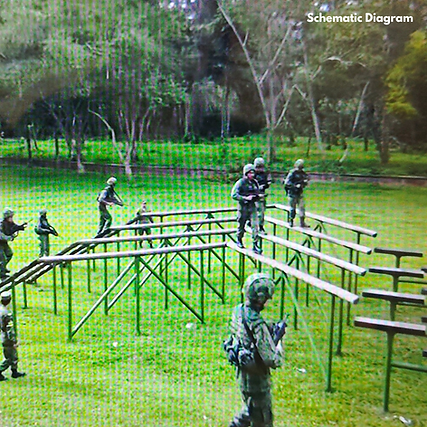
If your child dreams of becoming a soldier, a police officer, a firefighter (Bomba), or even participating in elite school cadet programs, their foot structure matters more than you might realize.

The "Instant Rejection" Reality
It is a little-known fact among parents that the Malaysia Armed Forces, Royal Malaysia Police, and Fire and Rescue Department often have strict medical SOPs regarding foot structure.
During the initial physical screening (often referred to as the "Kaki Itik" check), candidates with severe flat feet are frequently disqualified immediately.
But why these units so strict? It isn't about "looks", it is about biomechanical endurance.
Why Uniformed Units Reject Flat Feet?
The life of a soldier or police officer demands peak physical performance. The foot arch acts as a natural shock absorber and a 'spring' for movement.
Without it, the body faces several functional challenges:
1. Reduced Shock Absorption
During high-impact activities like jumping or running with heavy tactical gear, a flat feet cannot distribute force evenly.
This sends "shockwaves" up to the ankles, knees and lower back.
2. Early Fatigue in Long Marches
Uniformed service involves standing for hours and marching long distances.
Individuals with flat feet often experience premature muscle fatigue and arching, which can hinder a unit's operational speed.
3. Increased Injury Risk
Flat feet often lead to over-pronation (the foot rolling inward).
Over time, this increases the risk of shin splints, stress fractures, and chronic knee pain, injuries that the military and police want to avoid in their recruits.

The Importance of Early Prevention & Correction
The most critical window for foot development is during childhood and early adolescence (typically between ages 7 and 15).
Once a child reaches adulthood and the bone structure sets, correcting a "rigid" flat foot becomes significantly more difficult.
Early Intervention is the key to keeping career doors open
By identifying flat feet early, parents can take proactive steps to restore the arch and improve gait mechanics.
At SpineCare Engineering, we focus on the First Ray Control Framework, which helps children:
-
Strengthen the intrinsic muscles of the foot.
-
Develop a functional arch that can withstand physical stress.
-
Improve overall postural alignment from the ground up.
Don't Let a Treatable Condition Limit Their Future
If your child is active in school cadets (Kadet Polis/Kadet Remaja Sekolah) or expresses interest in a career of service, now is the time to check their foundation.
A "Kaki Itik" diagnosis at age 18 can be a heartbreaking end to a dream, but early correction at age 9 can be the start of a thriving career.
Is your child's foot structure ready for the challenge? Early screening ensures that when they stand before a recruitment board, their feet are as strong as their ambition.